Your Guide to Winning Online: The Power of Digital Marketing Agents
The world of business has changed. If you look back just a few years, “going digital” meant having a basic website and perhaps a Facebook page. Today, the landscape is unrecognizable. We are living in an era where the noise is louder than ever, and the attention span of the average consumer is shorter than the time it takes to brew a cup of coffee. To survive, businesses can no longer rely on guesswork or sporadic social media posts.
This is where the role of specialized experts and automated systems comes into play. Navigating the complexities of search engine algorithms, viral video trends, and data privacy laws is a full-time job—or rather, a dozen full-time jobs. To bridge this gap, many companies are turning to “Digital Marketing Agents” to streamline their operations and ensure their brand stays relevant in a fast-moving marketplace. These “agents”—whether they are highly skilled professionals or the latest autonomous AI systems—act as the engine behind a brand’s online presence.
In this blog, we will explore how these entities are reshaping the industry, the essential services they provide, and why investing in them is no longer optional for those who want to lead.
Detailed Explanation of Services in Digital Marketing
Digital marketing is not a single task; it is a massive ecosystem of moving parts. When you work with professional teams or deploy advanced systems, you are tapping into a variety of specialized services. Here is a breakdown of what a comprehensive digital strategy actually looks like:
1. Search Engine Optimization (SEO)
SEO is the art and science of making sure your business shows up when someone asks a question on Google or Bing. It involves technical website fixes, keyword research, and high-quality content creation. The goal is to cultivate “organic” growth, attracting a steady stream of visitors naturally through search relevance rather than paying a fee for every individual click.
2. Content Marketing and Strategy
Content is the fuel for all digital activities. This includes blog posts, whitepapers, case studies, and newsletters. It isn’t just about writing; it’s about telling a story that solves a problem for your audience, building trust long before a sales pitch is ever made.
3. Social Media Management
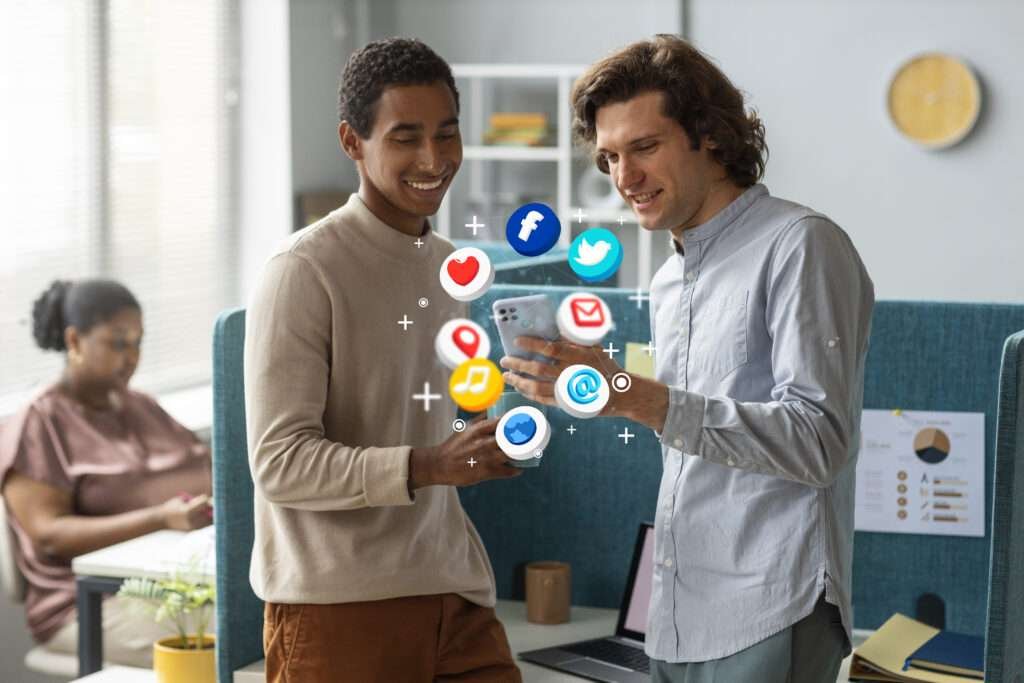
Being “on” social media isn’t enough. Modern services include community management, trend hopping, and platform-specific content creation for Instagram, TikTok, LinkedIn, and X (formerly Twitter). It’s about engagement and building a tribe around your brand.
4. Pay-Per-Click (PPC) Advertising
This is the “fast-track” to visibility. By using Google Ads or Meta Ads, you can place your brand directly in front of people who are searching for exactly what you sell. It requires constant monitoring to ensure that your “cost per acquisition” stays lower than your profit margins.
5. Email Marketing and Automation
Email remains one of the highest-ROI channels. Modern services go beyond simple blasts; they use automation to send personalized messages based on a user’s behavior—like a “welcome” discount for a new subscriber or a “we miss you” note for someone who hasn’t visited in a month.
Benefits of Using Digital Marketing Services
Why do businesses outsource these tasks or use automated systems? The answer lies in the massive competitive advantage they provide.
Access to Specialized Expertise: You don’t have to be an expert in the latest Google update or the nuances of TikTok’s algorithm. You get a team that lives and breathes these changes every day.
Cost Efficiency: Hiring a full in-house team for SEO, design, copywriting, and ads is expensive. Utilizing external services or **Digital Marketing Agents** allows you to scale your efforts up or down without the overhead of multiple full-time salaries.
Data-Driven Results: Digital marketing is measurable. Unlike a billboard on a highway, you know exactly how many people saw your ad, how many clicked, and how much money you made from that specific interaction.
Time Savings: As a business owner or manager, your time should be spent on product development and high-level strategy. Leaving the “digital heavy lifting” to specialists allows you to focus on your core strengths.
Latest Trends in Digital Marketing
The digital world moves at light speed. What worked last year might be obsolete today. As we move through 2026, several key trends are dominating the conversation:
The Rise of Autonomous Agents
We are seeing a shift from simple “tools” to “agents.” An agent doesn’t just wait for you to type a prompt; it monitors your data, notices that an ad’s performance is dropping, and automatically adjusts the budget or tests a new headline. This level of autonomy is revolutionizing how small teams compete with global giants.
Hyper-Personalization at Scale
Generic marketing is dead. Consumers now expect brands to know their preferences. By leveraging AI-driven insights, businesses can now provide thousands of customers with a personalized website experience or email sequence simultaneously, ensuring each interaction feels uniquely tailored to the individual.
Short-Form Video Dominance
Short, punchy video content continues to be the primary way people consume information. Brands are moving away from polished, expensive commercials and toward “authentic” lo-fi videos that feel like they were made by a friend rather than a corporation.
Conversational Commerce
The “Search Bar” is being replaced by the “Chat Box.” People want to ask questions in plain English and get immediate answers. Whether through WhatsApp, Instagram DMs, or onsite chatbots, the ability to close a sale through a conversation is a major growth driver.

Key Components of a Successful Strategy
If you want to build a digital presence that actually converts, you need to focus on these core pillars:
Clear Brand Voice:Your messaging must be consistent across every platform. Whether a customer sees your LinkedIn post or your email, they should recognize it’s *you*.
Mobile-First Design: The majority of web traffic is now on smartphones. If your site is slow or hard to navigate on a phone, you are losing money.
First-Party Data: With the decline of “cookies” and third-party tracking, successful businesses are focusing on collecting their own data through newsletters and loyalty programs.
Social Proof: Reviews, testimonials, and user-generated content are the new currency of trust. People trust other people more than they trust brands.
Continuous Testing: A “set it and forget it” mindset is dangerous. Successful strategies involve constant A/B testing of headlines, images, and call-to-action buttons.
The question is no longer “should we invest?” but “how much should we invest?” In the modern economy, your digital presence is your storefront. If you aren’t visible online, you effectively don’t exist for a large segment of your potential market.
Investing in digital marketing is an investment in future-proofing. It allows you to reach a global audience with a local budget. It levels the playing field, allowing a small boutique to outrank a massive corporation through better content and smarter targeting. More importantly, it provides a feedback loop. Every dollar spent generates data that tells you more about your customers, their pain points, and what they actually want to buy. This insight is invaluable for long-term product development and business growth.
Furthermore, the integration of Digital Marketing Agents into your workflow ensures that your brand remains active 24/7. While your team sleeps, your digital systems are qualifying leads, answering customer questions, and optimizing your ad spend to ensure every penny is working as hard as possible.

The transition from traditional to digital is complete, and the transition from manual to automated is well underway. To stay ahead, businesses must embrace a multi-faceted approach that combines human creativity with technical precision. Whether you are a small startup or an established enterprise, the ability to communicate effectively in the digital space will be the primary factor that determines your success in the coming decade.
Digital marketing is no longer just a department—it is the heartbeat of modern commerce. By understanding the services available, staying on top of the latest trends, and investing in the right people and technologies, you can turn the vast complexity of the internet into your greatest growth engine.